
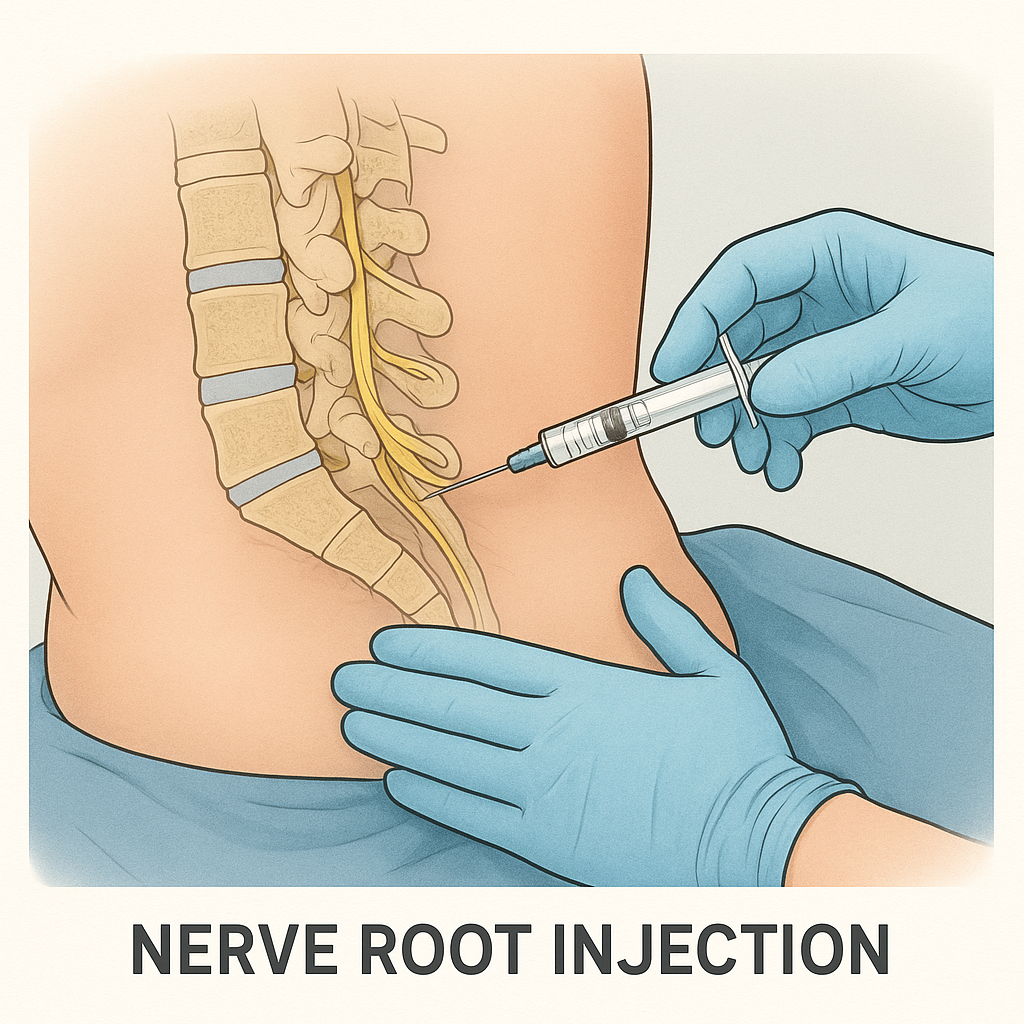
What is a Nerve Root Injection?
A Nerve Root Injection is a procedure used to diagnose and treat pain caused by irritation or
inflammation of a spinal nerve as it exits the spine. It involves injecting a combination of
steroid and local anaesthetic near the affected nerve root to reduce inflammation and relieve
pain.
What conditions do we offer this for?
Nerve root injections are commonly used for:
- Sciatica
- Nerve pain following spinal surgery
- Post herpetic neuralgia
- Spinal stenosis
- Herniated (slipped) disc
- Nerve root compression (radiculopathy)
Why is it done?
The injection aims to:
- Reduce nerve inflammation and swelling
- Relieve radiating nerve pain (e.g., down the leg or arm)
- Help confirm which nerve is causing the pain (diagnostic benefit)
- Improve function and support physiotherapy or rehabilitation
What does the procedure involve?
- You will lie on your front or side on an X-ray or ultrasound table.
- The skin over the area will be cleaned and numbed with local anaesthetic.
- Using imaging guidance, a fine needle is positioned close to the affected nerve root.
- A small amount of steroid and anaesthetic is injected.
- The use of steroids in the epidural space is an off-label (off-licence) treatment. Although not specifically licensed for epidural injection by the manufacturer, it is widely used by pain specialists and anaesthetists when clinically appropriate.
The procedure typically takes 15–30 minutes and is done as a day case.
- The use of steroids in the epidural space is an off-label (off-licence) treatment. Although not specifically licensed for epidural injection by the manufacturer, it is widely used by pain specialists and anaesthetists when clinically appropriate.
The procedure usually takes 15–30 minutes.
Further evidence-based patient information is available from the Faculty of Pain Medicine (Royal College of Anaesthetists). Please click this link to access this resource.
Benefits
- Targeted pain relief
- Reduced need for strong pain medications
- Improved mobility and quality of life
- May delay or avoid surgery
- Useful for diagnosing the exact source of nerve pain
Side Effects
Very Common side effects
(may affect more than 1in 10 patients):
- Pain & bruising at injection site
- Temporary increase in nerve pain
- Facial flushing or warmth
- Mild headache
Common side effects
(may affect up to 1in 10 patients):
- Insomnia
- Increased blood sugar (especially in diabetics)
- Nausea
Uncommon side effects
(may affect up to 1 in 1,00 patients):
- Temporary leg numbness or weakness
- Dural puncture headache (if spinal fluid is accidentally tapped)
Rare side effects
(may affect up to 1 in 1,000 patients):
- Infection at the injection site
- Bleeding or haematoma
- Nerve damage, paralysis
- Allergic reaction to medication
Aftercare Advice
- You can usually go home within an hour after the procedure.
- Avoid driving for 12–24 hours.
- Some increase in symptoms is possible for 24–48 hours before improvement begins.
- Gradually return to normal activities.
- If you are diabetic, monitor your blood sugar more frequently for a few days.
When to Seek Medical Attention
Seek urgent medical help (attend A&E) if you experience:
- Fever or chills
- New or worsening numbness or weakness
- Difficulty with bladder or bowel control
- Severe or persistent headache