
What Is a bursa Injection?
- A bursa injection is used to treat pain and inflammation under the acromion—the bony point on the outside of the shoulder.
This area is commonly affected in conditions such as: - Bursitis (bursa inflammation)
- Impingement (one bone struggles to pass under the protruding bone; causing a painful arc)
“Shoulder bursa injections may provide targeted relief from persistent shoulder pain.”
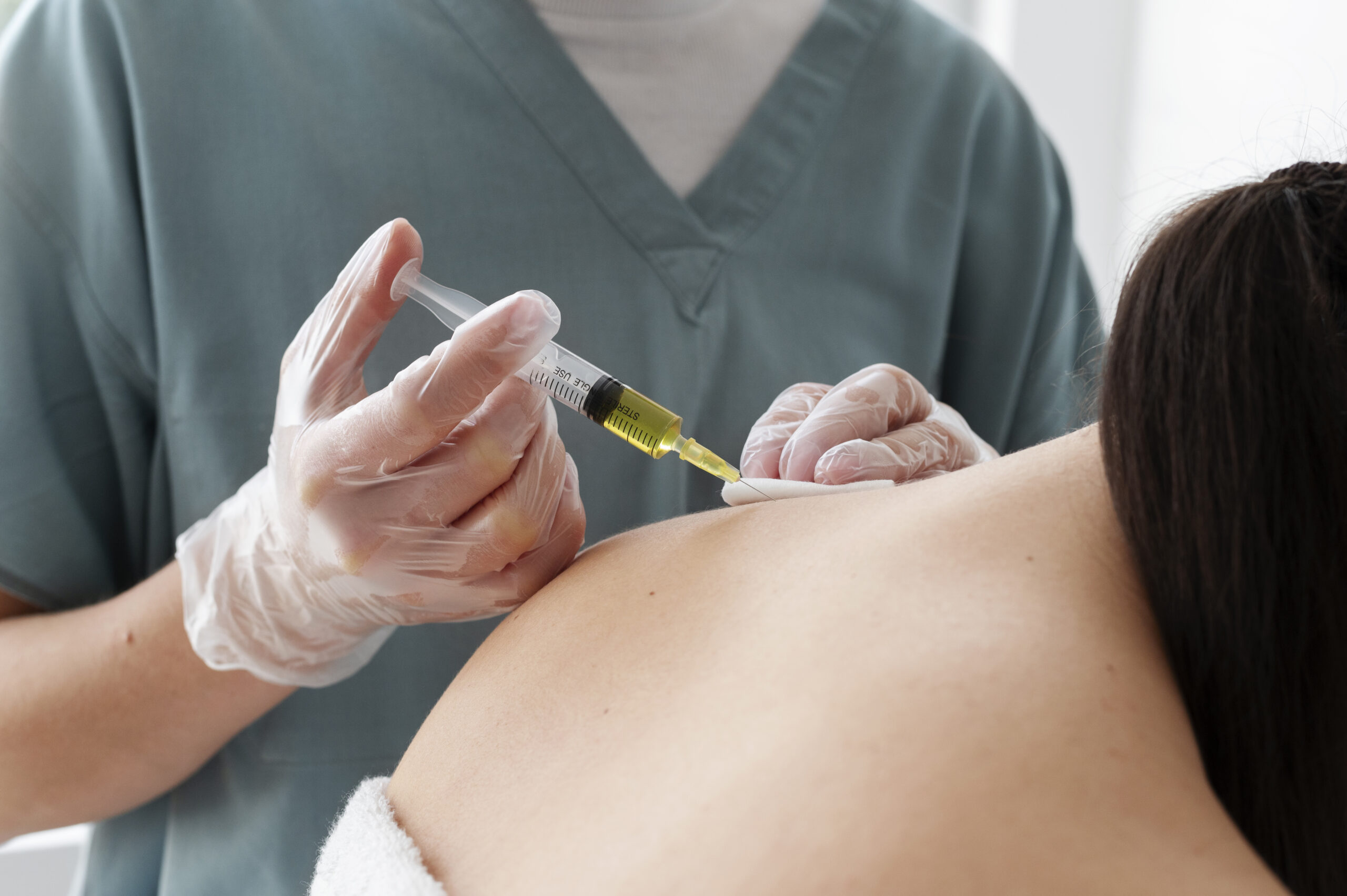
How Does It Work?
The injection delivers a combination of local anaesthetic and corticosteroid into the space between two gliding tendons.
This treatment aims to:
- Reduce inflammation
- Settle irritation of the tendons and surrounding bursa
- Relieve pain, making it easier to move the affected area and improve sleep
The injection is most effective when combined with a structured physiotherapy or stretching programme to restore movement, strength, and long-term function.
What to Expect During the Procedure
- Carried out in a clinical procedure room
- You’ll lie on your side or sit on a couch.
- The skin is cleaned and numbed
- A fine needle is guided to the target area using ultrasound
- Medication is slowly injected
The procedure takes around 10–15 minutes, followed by a brief recovery period.
Benefits of bursa Injections
- Targets the source of lateral shoulder pain, particularly inflammation around the rotator cuff tendons and bursa.
- Reduces pain when lifting your arm, reaching overhead, or lying on the affected shoulder.
- Makes it easier to participate in physiotherapy, helping restore strength and movement.
- Minimally invasive, performed as a quick outpatient procedure with a short recovery time.
- May delay or avoid the need for surgery in carefully selected patients.
Pain relief may begin within a few days, although the steroid can take up to 2 weeks to reach its full effect. When successful, the benefits often last for several months.
Is It Safe?
Yes. This is a safe and commonly performed treatment when done by trained clinicians. You should inform us if you:
- Are you allergic to steroids or anaesthetics
- Are you pregnant or breastfeeding
- Are you diabetic or take blood thinners
- Have any recent infection or fever
Side Effects
Common side effects
(may affect more than 1 in 10 patients):
- Mild soreness or bruising at the injection site
- Temporary flare-up of pain for 24–48 hours
- Facial flushing
Uncommon side effects
(may affect up to 1in 100 patients):
- Infection at the injection site
- Bleeding or local skin thinning
⚠️ Avoid strenuous activity and driving for 24 hours post-injection.
After the Injection
- You’ll be monitored for a short time before discharge
- A companion should drive you home
- Rest the arm for the first day, then gradually increase movement
- You may start physiotherapy after a week
- A review appointment may be scheduled to assess your response
Our Clinical Insight
Shoulder bursa injections are very helpful for:
- Persistent outer shoulder pain, particularly due to subacromial bursitis or rotator cuff irritation.
- Pain that has not improved with rest, painkillers, ice, or physiotherapy exercises.
- Difficulty lifting the arm, reaching overhead, dressing, or sleeping on the affected side.
- Improving shoulder function, mobility, and quality of life.